
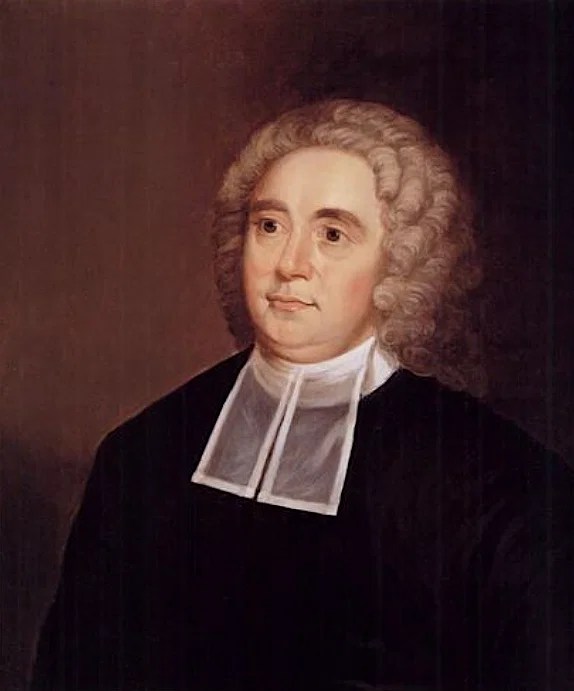
如果有一天,有人告诉你:
“你看到的这张桌子其实不存在。”
你可能会笑出来,觉得这人不是疯了就是喝多了。
可偏偏,这句话出自一位主教——
一个温和、虔诚、逻辑极清晰的神学家。
他叫乔治·贝克莱(George Berkeley, 1685–1753)。
他不但不是疯子,反而是那个时代最聪明的人之一。
他的想法,把整个哲学界都吓了一跳。
⸻
一、那个早慧的爱尔兰人
贝克莱出生在爱尔兰的一个普通家庭,十几岁就进入都柏林三一学院。
年轻时,他就对笛卡尔和洛克的思想非常感兴趣。
那个时代的欧洲,笛卡尔刚刚让人们相信“物质世界可以被理性解释”,
而洛克说:“我们的知识都来自感官经验。”
贝克莱看完两人后,想了想,然后说出一句让哲学史抖了三百年的话:
“存在,就是被感知。”(To be is to be perceived.)
⸻
二、他到底在说什么?
贝克莱的意思很简单也很惊人:
世界上没有所谓“独立存在的物质”。
桌子、山、星星,这些东西之所以“存在”,
是因为我们在感知它们。
如果没有人看、没有人听、没有人感受——
那“桌子”就不再存在。
因为“存在”本身就是“被感知”的过程。
举个例子:
当你关上房门时,房间里的桌子“还在”吗?
按贝克莱的说法,只有当有人感知它时,它才“存在”。
听起来像个悖论。那你可能会问:
“那我睡觉时房间里的桌子去哪了?”
贝克莱笑了笑说:
“它当然还在。因为上帝一直在感知。”
⸻
三、他的动机:不是为了颠覆,而是为了信仰
很多人以为贝克莱是在挑战科学或常识,
其实他是在试图拯救信仰。
当时的欧洲,机械论盛行。
人们相信世界是由“物质粒子”组成的机器,
上帝的存在似乎越来越没有必要。
贝克莱很担心。
他觉得如果世界被还原成冷冰冰的物质,
人类就会失去意义与灵魂。
于是他干脆把整个“物质世界”都拿掉,
只留下两样东西:
• 感知的主体(人类的心灵)
• 感知的守护者(上帝的心灵)
在他的世界观里,世界不是物质堆成的,
而是心灵之间的互动。
上帝是那个永远在“看着”的存在,
因此世界才不会因为我们闭眼而消失。
⸻
四、为什么他说的这么“离谱”却没人能彻底反驳?
听起来贝克莱像个唯心主义者(其实他真的是),
但奇妙的是——他的逻辑非常严密。
你想反驳他,就得先回答一个问题:
“请你给我看看那个‘不被感知的物质’。”
结果没人做得到。
因为一旦你去“看”或“想”那个物质,
它就已经“被感知”了。
贝克莱的思路像个哲学陷阱——优雅、完美、无懈可击。
他不否认经验,只是说:
经验的对象不是“外在的物质”,而是“心中的感知”。
从某种意义上说,他让世界“消失”,
但也让意识变得无限辽阔。
世界不再是外面的石头,而是心灵的一种呈现。
⸻
五、他的人生:从哲学家到主教
贝克莱的生活并不戏剧化。
他后来成为英国国教的主教,
去美洲传教、办学校,甚至写教育论文。
他不是那种“孤独的天才”,
而是一个温厚、平和、真心相信上帝与人性的哲人。
他的一生像他的思想一样——
不喧哗,却极度坚定。
他写信给朋友说:
“我并不怀疑世界,我只是改变了人们看世界的方式。”
⸻
六、他对后世的影响
贝克莱的思想在当时被很多人嘲笑,说他“太天真”。
但后来人们发现,他其实是唯心主义的奠基人。
德国哲学家黑格尔、康德、甚至现代现象学家胡塞尔,
都在不同程度上继承了他的思想。
他对科学也有启发——
现代物理学的量子理论,不也在说“观察决定存在”吗?
电子的位置,只有在被观察时才确定。
贝克莱三百年前就暗示了这一点。
甚至连人工智能的认知问题——
“机器如何感知世界?”
本质上也是贝克莱式的问题。
我们能否想象一个“没有感知的存在”?
也许,不能。
⸻
七、一个温柔的哲人
贝克莱不是那种激烈的思想家。
他不像尼采那样呐喊,也不像康德那样构筑庞大体系。
他只是静静地说:
“世界的存在不在于它在那里,而在于我们在这里。”
这句话像一首诗。
他让人意识到,哲学不一定要抽象、冷硬。
它也可以柔软、温暖,
像一面镜子,照出我们心中那个“世界”。
Berkeley: The Man Who Made the World “Disappear”
By Geoffrey Chen | Column: Intelligence & Thought
If one day someone told you,
“The table you see in front of you doesn’t really exist,”
you’d probably laugh and think they’d gone mad—or had too much to drink.
But that line actually came from a bishop—
a gentle, devout, razor-sharp theologian named George Berkeley (1685–1753).
He wasn’t insane; he was one of the most brilliant minds of his age.
And his ideas startled the entire world of philosophy.
1. The Precocious Irishman
Berkeley was born in Ireland to an ordinary family
and entered Trinity College Dublin while still a teenager.
As a young student he was fascinated by Descartes and Locke.
In Europe at the time, Descartes had convinced people
that the material world could be explained by reason,
while Locke declared that all knowledge comes from the senses.
Berkeley read them both, thought quietly for a while,
and then said a sentence that shook philosophy for the next three centuries:
“To be is to be perceived.”
2. What on Earth Did He Mean?
Berkeley’s claim was simple yet shocking:
there is no such thing as matter existing independently of perception.
Tables, mountains, stars—these things exist
only because we perceive them.
If no one sees, hears, or feels them,
then those objects simply cease to exist.
Because, for Berkeley, to exist is to be perceived.
Imagine closing your door—
is the table inside your room still there?
According to Berkeley, it exists only when someone perceives it.
That sounds like a paradox, so you might ask,
“Then where does the table go while I’m asleep?”
Berkeley would smile and answer,
“It’s still there—because God is always perceiving.”
3. His Motive: Not to Destroy but to Defend Faith
Many people thought Berkeley was attacking science or common sense.
In fact, he was trying to protect faith.
Mechanistic science was booming in Europe.
People began to see the universe as a vast machine made of particles;
God seemed less and less necessary.
Berkeley worried deeply about that.
He feared that if the world were reduced to cold matter,
human meaning and spirit would vanish with it.
So he simply removed “matter” altogether
and left only two kinds of being:
- the minds that perceive (human spirits), and
- the Mind that sustains perception (God).
In Berkeley’s worldview, the universe is not a pile of atoms
but a continuous conversation between minds.
God is the ever-watchful perceiver,
so the world doesn’t disappear when we close our eyes.
4. Why No One Could Really Refute Him
Berkeley sounded like an idealist—because he was one.
But his logic was so tight that no critic could fully undo it.
To disprove him, you’d have to show an object that exists
without being perceived.
But the moment you try to think of it or look at it,
it’s already being perceived.
That’s Berkeley’s philosophical trap—
elegant, flawless, and almost unbreakable.
He didn’t deny experience;
he simply redefined it.
The objects of experience are not external material things,
but perceptions in the mind.
In that sense, he made the material world “disappear,”
yet expanded consciousness to infinity.
The world is no longer a lump of matter “out there,”
but a living presentation within mind itself.
5. From Philosopher to Bishop
Berkeley’s life was calm, even uneventful.
He later became a bishop in the Church of England,
traveled to America, established schools, and wrote on education.
He wasn’t a tortured genius or a rebellious skeptic,
but a gentle, steadfast believer in both God and humanity.
His life mirrored his thought—quiet but unwavering.
He once wrote to a friend:
“I do not deny the world;
I only change the way men see it.”
6. His Influence Afterwards
In his own day, people mocked Berkeley as naïve.
But later generations realized he was the founder of idealism.
Hegel, Kant, and the phenomenologist Husserl
all inherited something from him.
Even science found echoes of his ideas.
Modern quantum physics tells us that an electron’s position
isn’t definite until it is observed—
a thought Berkeley hinted at three hundred years earlier.
And the questions behind artificial intelligence—
How does a machine “perceive” the world?—
are, in essence, Berkeleyan questions.
Can we imagine existence without perception?
Perhaps not.
7. A Gentle Philosopher
Berkeley was never an aggressive thinker.
He didn’t roar like Nietzsche
or build vast systems like Kant.
He simply said, quietly:
“The world’s existence lies not in its being there,
but in our being here.”
That line sounds more like poetry than philosophy.
He showed that philosophy need not be cold or abstract—
it can also be tender and humane,
like a mirror reflecting the world within our own hearts.
了解 Geoffrey Chen 的更多信息
订阅后即可通过电子邮件收到最新文章。